Buff Your Gut: A Healer's Coconut L. Reuteri Yogurt Recipe
My history with yogurt goes back a long way. When I gave up dairy around 2012, I really missed it—and at the time there weren't many vegan options in Montreal. So I started making my own.
I bought a yogurt maker and tried different plant-based milks—cashew, almond, oat, and coconut—both store-bought and homemade. The results were decent, but the texture was nowhere near the creaminess of dairy yogurt.
Plant-based milk doesn't have the same consistency as dairy, so you have to rely on thickeners to get close. I usually used chia, but the result was more like pudding than yogurt.
Finally, after a lot of research and experimentation, I found the missing pieces. It was so simple that I almost felt ashamed I hadn't thought of it before: instead of coconut milk, I started using pure coconut fat. That alone created a much thicker consistency, closer to the texture of traditional dairy yogurt.
The second improvement was using a starch to make the texture even creamier. I usually do not like adding extra ingredients, but in this case the benefits outweighed the downsides. Tapioca starch became my preferred option because it is gluten-free and works well without changing the flavor too much.
The results were amazing from the start. Coconut fat is already creamy by nature, so the base texture is there from the beginning. Tapioca starch also plays an important role because, depending on the brand you use, the water content can vary. When used correctly, it binds everything together and can give the final yogurt a texture very close to Greek yogurt.
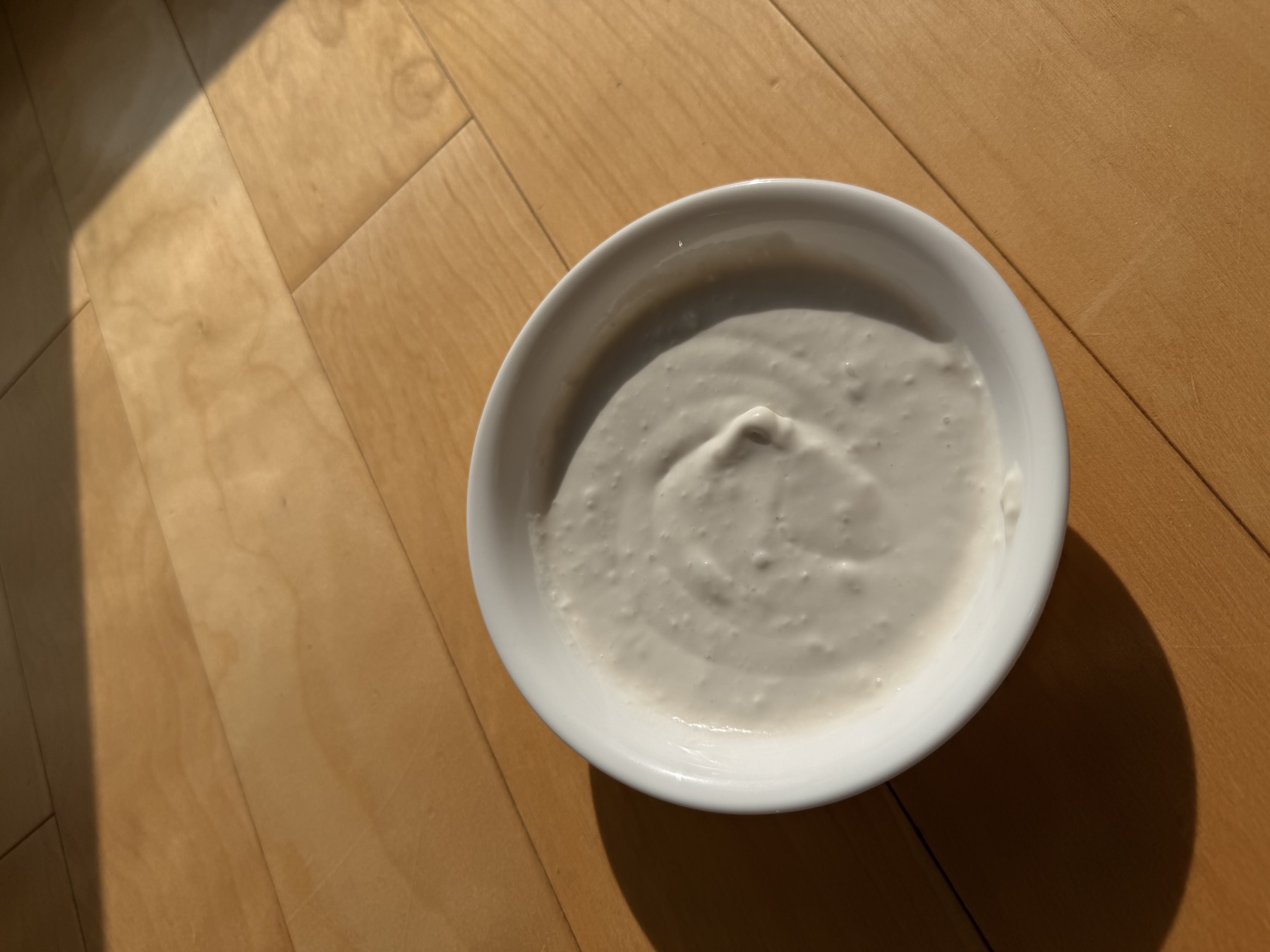
The final texture: thick, glossy, and very close to Greek yogurt.
After that, the next step is getting the fermentation right, and voilà: pure coconut yogurt with a delightful texture, without the preservatives you often find in store-bought versions.
Ingredients
- 2 cans of organic coconut cream (the higher the fat content, the better).
- 2 tablespoons of inulin, to feed the bacteria.
- 2 capsules of L. reuteri. I use a specific supplement, but there are several other yogurt starters too. L. reuteri is very gut-friendly.
- 1/4 cup of organic tapioca starch.
How to prepare
- Over low heat, warm the coconut cream and stir until it becomes creamy and smooth rather than solid, so it is easier to mix.
- Add the tapioca starch and make sure it is fully dissolved and integrated into the coconut fat. The mixture should look glossy and thick.
- Pour the mixture into a clean glass jar and let it cool until it is only slightly warm to the touch. This step is important because too much heat will kill the bacteria.
- Once the jar is warm to the touch, add the starter (L. reuteri in my case) and its food (2 tablespoons of inulin).
- Using a hand blender, blend everything for about one minute.
- Close the lid and place the jar in a yogurt maker or an Instant Pot (I use an Instant Pot) with water. Leave it for 36 hours.
After that, refrigerate overnight for better consistency; then it's ready to eat.
It's that simple. I like to add an extra fermented touch to my yogurt instead of fruit—I often add sauerkraut on top. You can do whatever you like and make the recipe yours! Enjoy the delicious fermented food that is one of the most powerful additions to healing your gut.
Why L. reuteri?
Part of why I keep coming back to L. reuteri is that gut healing has been such an important part of my own health journey. What makes this bacteria interesting to me is that current research suggests some strains may help support the gut lining, reduce intestinal permeability, and calm inflammatory signals. I do not see it as a magic bullet, and the evidence is still more convincing in some strains and study designs than in others, but it is promising enough that I think L. reuteri deserves attention from anyone trying to build a more resilient gut.
References
- Limosilactobacillus reuteri - a probiotic gut commensal with contextual impact on immunity (PubMed)
- Impact of Oral Administration of Lactobacillus reuteri LMG-P 27481 on Human Gut Microbiota Diversity and Function: A Pilot Study (PMC)
- Lactobacillus reuteri in digestive system diseases: focus on clinical trials and mechanisms (PubMed)
Comments